


TL;DR: Key takeaways and one-page monetization snapshot
-
Ads: 30% to 60%, steady base that scales with watch time and CPM.
-
Sponsors: 10% to 40%, higher per-view payouts but needs niche trust.
-
Affiliates and product: 5% to 25%, depends on funnel and CTA.
-
Localization uplift: +10% to +100% incremental revenue, translated and dubbed versions can double audience in target languages.
Why faceless channels are a smart play in 2026
Why now: three macro trends that matter
-
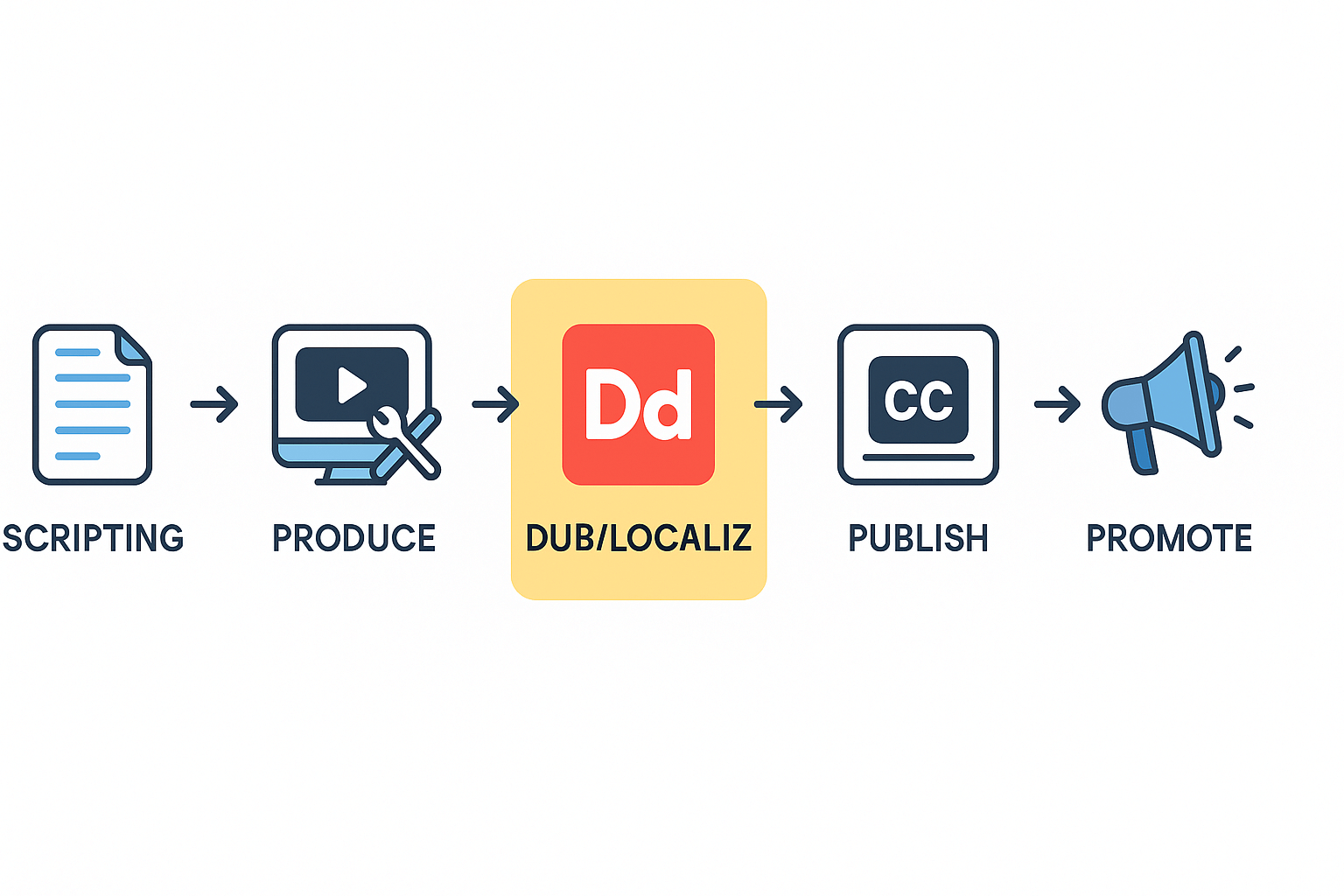
Faster production: Script to publish in hours, not days. That improves experimentation.
-
Easier scaling: Small teams can run multiple channels at once. Roles split into scripting, editing, and localization.
-
Localization demand: Non-English views are growing, and dubbed videos often get higher watch time in local markets.
Formats that reliably monetize
|
Format
|
Why it scales
|
Localization fit
|
Monetization fit
|
|
Narration explainers
|
Script-based, repeats well
|
Excellent, easy to dub
|
Ads, affiliates, courses
|
|
Compilations and top lists
|
Template editing, low per-video cost
|
Good, needs clear timestamps
|
Ads, sponsorships
|
|
Animations and motion graphics
|
High reuse, evergreen
|
Very good, voice-only swap
|
Ads, merch, licensing
|
|
Shorts and repurposed clips
|
Fast to make, high reach
|
Good for captions and voice snippets
|
Ads, channel growth
|
How AI dubbing and voice cloning multiply value
-
Faster time to market, since dubbing and subtitles auto-sync.
-
Lower localization cost, so ROI on translating a hit video is high.
-
Consistent voice branding, which helps long-term audience trust.
Monetization models for faceless YouTube channels — an overview
Ad revenue: basics and realistic RPMs
Sponsorships and brand deals
Affiliate funnels
Owned revenue: memberships, merch, and courses
Licensing, clips, and syndication
|
Revenue stream
|
Typical pay cadence
|
Localization leverage
|
|
AdSense
|
monthly
|
medium — expands CPM pools
|
|
Sponsorships
|
per campaign
|
high — region-specific deals
|
|
Affiliate
|
ongoing
|
high — better conversions localized
|
|
Memberships & merch
|
recurring
|
medium — trust via native language
|
|
Courses & licensing
|
one-time + renewals
|
high — broader buyer pool
|
Where localization adds the most leverage
How tools like DupDub fit into the stack
Ad revenue deep dive: RPM, watch time, and realistic benchmarks
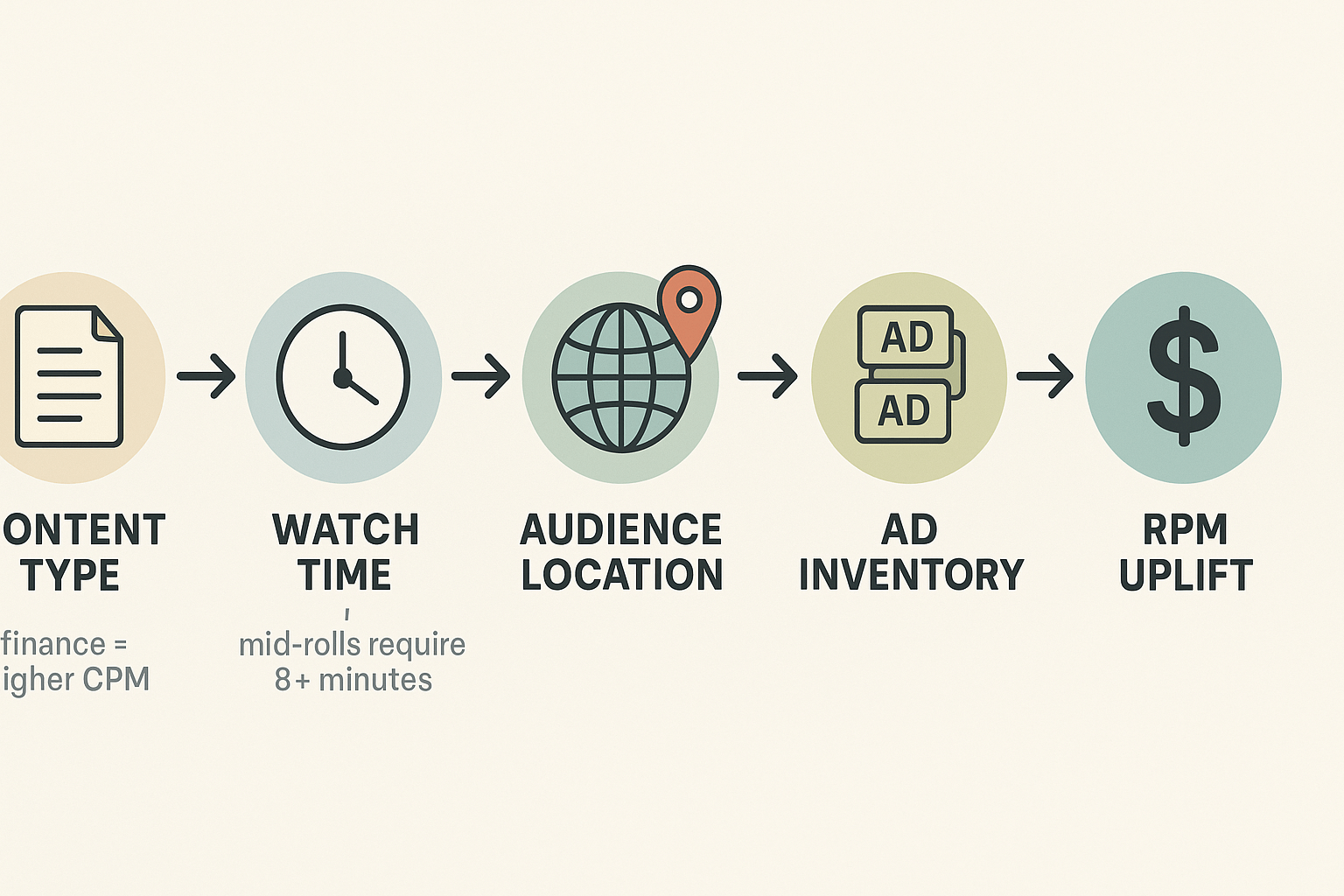
How RPM is calculated
Why watch time and geography change RPM
Realistic RPM benchmarks by niche
|
Niche
|
Typical RPM range (USD per 1,000 views)
|
|
Finance and investing
|
5.00 to 20.00
|
|
Tech and B2B software
|
3.00 to 12.00
|
|
Health and wellness
|
2.50 to 10.00
|
|
Education and how-to
|
1.50 to 6.00
|
|
Lifestyle and entertainment
|
0.50 to 4.00
|
Simple ad revenue projection model
-
Start with monthly views. Example: 100,000 views.
-
Estimate average retention and watch time to decide mid-roll eligibility. Assume 20% mid-roll eligible views.
-
Pick a realistic RPM from the niche table. Example: $4.00.
-
Monthly ad revenue = (monthly views / 1,000) * RPM. Example: (100,000 / 1,000) * $$4.00 =$$400.
Practical tactics to improve RPM without showing your face
-
Increase average view duration: script tighter intros, use chapter markers, and add mid-rolls only when watch time justifies them. Mid-rolls boost RPM only if viewers stay.
-
Target higher-value geos: promote videos in English-speaking and Western markets via paid discovery or translated thumbnails and titles.
-
Niche up: tighter topic focus attracts advertisers with higher CPMs, like finance or software demos.
-
Use keywords that match commercial intent: product reviews, comparisons, and tutorials convert advertisers better.
-
Add captions and localized dubs to reach new geos. Localization often multiplies views while keeping production cost low.
Quick checklist to test RPM changes
-
Track RPM and effective CPM weekly.
-
A/B test thumbnails and titles for click quality, not just CTR.
-
Split videos by length, and monitor mid-roll performance.
-
Localize your top 10% of catalog, then compare RPM and views.
Direct revenue streams: Sponsorships, affiliates, and merch
Package sponsors by clear outcomes
-
Bronze: pre-roll mention, link in description, one static thumbnail frame. Good for short campaigns.
-
Silver: mid-roll 30 second host-read (voiceover), pinned link, included subtitle credit. Better for conversions.
-
Gold: localized versions in 2 or more languages, multi-video placement, CTA cards, and performance report.
Negotiate smart, and keep contracts simple
-
Clear deliverables and timelines. State placements and languages.
-
Payment terms and late fees. Split payment for new partners.
-
Usage rights for the sponsor and creator. Limit reuse if needed.
-
Cancellation and makegood terms. Define what counts as underperformance.
-
Disclosure and compliance. State who is responsible for regulatory text.
Build affiliate funnels without being on camera
-
Hook: short, benefit-led opener. Keep it to 6 seconds.
-
Value: explain product fit in the voiceover. Use exact keywords in the caption.
-
Trust signal: show screenshots, overlays, or short social proof clips.
-
CTA: clear link in description and a dedicated landing page.
-
Follow-up: retarget viewers with short localized clips.
Run merch and POD while protecting anonymity
-
Choose 3 core products: shirt, mug, sticker.
-
Use a POD partner with global fulfillment.
-
Bundle offers with video-specific promo codes.
-
Automate order emails and customer service templates.
-
Protect IP: trademark your logo if it becomes core to brand value.
Localization & multilingual growth: why and how it monetizes (DupDub use case)
Why localization lifts both views and revenue
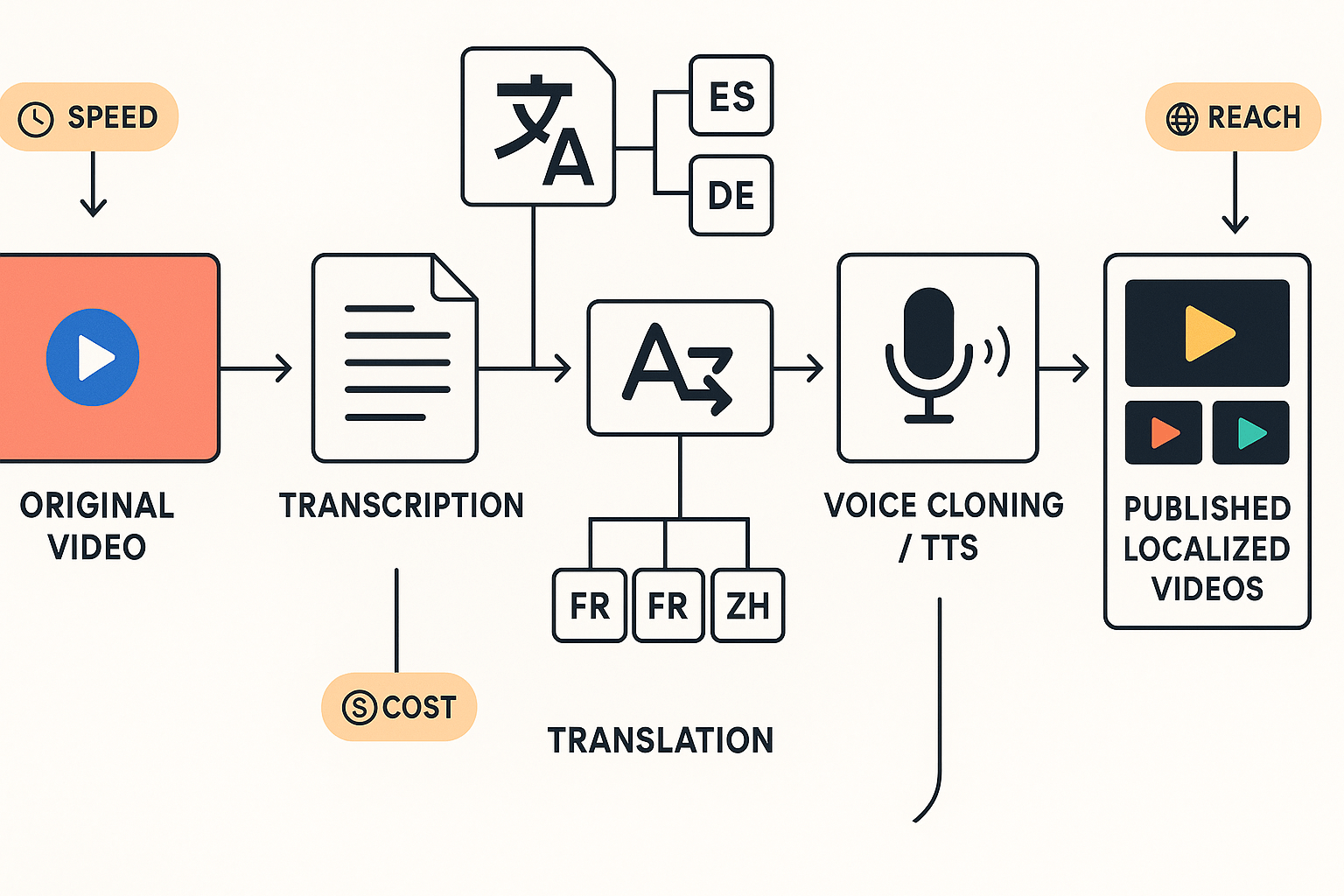
Step-by-step workflow to localize one video
-
Transcribe the source video, clean the text, and pick target languages. Use automatic speech-to-text for speed.
-
Translate the transcript, then edit for idiom and SEO keywords per language. A short human pass prevents awkward literal translations.
-
Create or clone the voice: choose TTS or voice cloning. Match tone, speed, and punctuation for natural delivery.
-
Auto-align subtitles and re-time the dubbed audio to the video. Check lip sync and pacing for long clips.
-
Export localized MP4s and SRTs, then publish staggered releases with localized titles and descriptions. Schedule captions and localized metadata to maximize discovery.
Quick ROI model, example numbers
|
Scenario
|
Views
|
RPM
|
Revenue (USD)
|
|
Original video
|
100,000
|
1.50
|
150
|
|
Each new language (x5)
|
20,000
|
1.20
|
24
|
|
Total from 5 languages
|
100,000
|
1.20
|
120
|
|
Combined total revenue
|
200,000
|
—
|
270
|
How DupDub cuts time and cost
Practical tips to maximize localization ROI
Legal, copyright, and monetization policy checklist for faceless creators
Copyright risks and how to avoid them
-
Use only licensed stock with commercial rights.
-
Keep timestamped purchase or license files.
-
Prefer platforms that provide transfer or redistribution rights.
YouTube monetization policy traps to watch
-
Avoid reused-content flags by adding original narration or commentary.
-
Add clear captions and source attributions in the description.
-
File disputes fast, but only when you have proof.
Hiring voice actors and cloning voices: contract checklist
-
Grant of rights: exclusive or nonexclusive, languages, and territories.
-
Scope of use: YouTube, ads, shorts, and repurposing rights.
-
Payment terms: flat fee, royalties, or revenue share.
-
Moral rights and attribution: waivers if needed.
-
Voice cloning consent: signed permission to create synthetic clones.
Payments, taxes, and international payouts
-
Use contracts that state who pays taxes for cross-border work.
-
Keep a spreadsheet for monthly receipts and payouts.
-
Consult an accountant for international treaties and withholding rates.
Final quick checklist
-
License proof for all third-party assets.
-
Contracts with voice talent and cloning consent.
-
AdSense and monetization linked and current.
-
Originals or substantial edits to avoid reused-content claims.
-
Clear invoicing and tax records for international income.
Scale, workflows & tools for a 90-day monetization roadmap
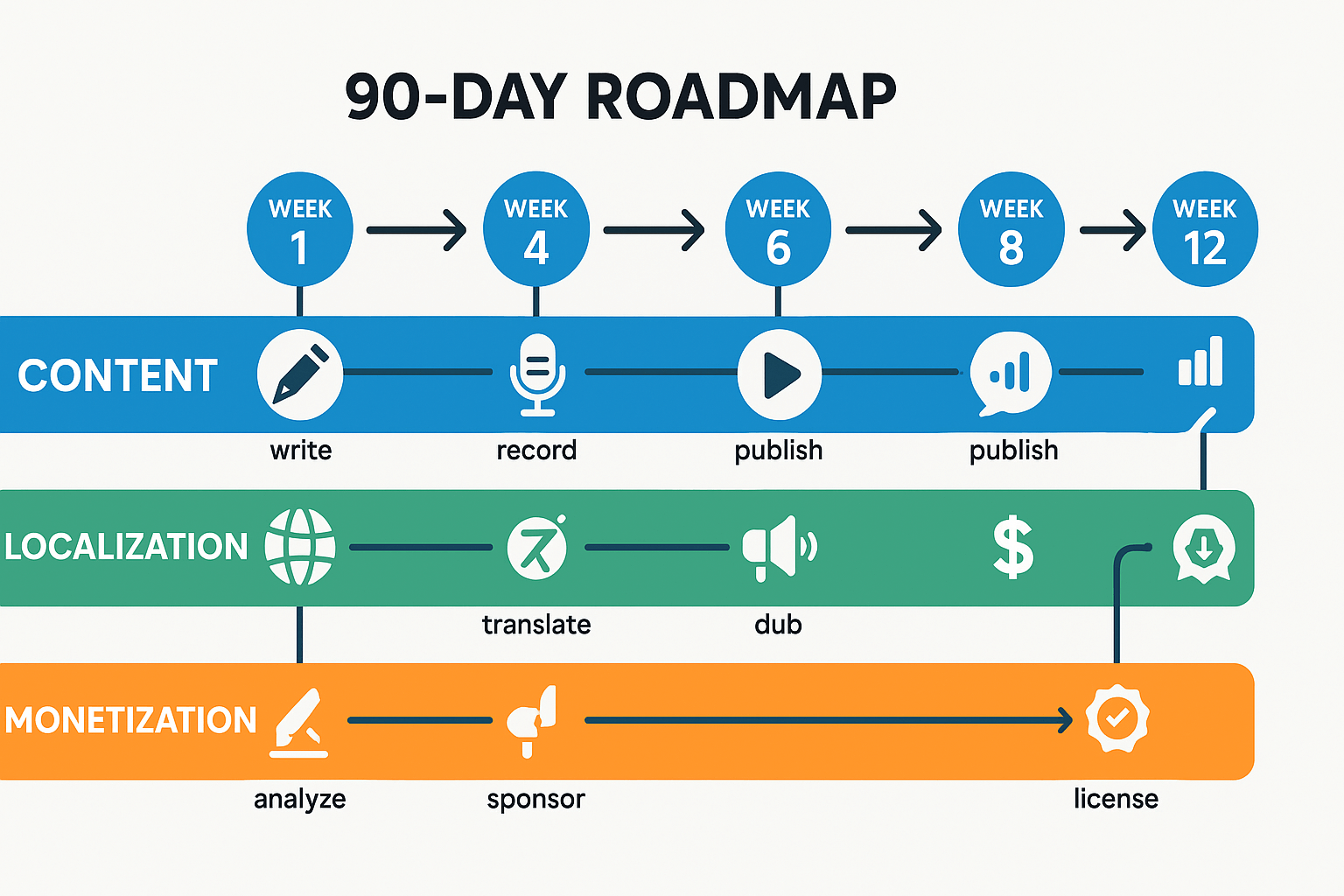
Week-by-week sprint (90 days)
-
Weeks 1 to 2: Foundation and batch scripting
-
Create 12 topic outlines and 6 full scripts.
-
Set channel templates: intro, CTAs, thumbnail style, and tags.
-
Audit target languages for localization priority: start with 2 high-opportunity languages.
-
Weeks 3 to 6: Batch production and core uploads
-
Record or generate base voiceovers and assemble video assets.
-
Run a first batch of 6 uploads, staggered twice weekly.
-
Begin automated captioning and basic A/B thumbnail tests.
-
Weeks 7 to 10: Localization and scale
-
Localize top 4 videos into chosen languages.
-
Use voice cloning for brand consistency.
-
Pitch sponsors with audience + localized reach data.
-
Weeks 11 to 13: Optimize and expand
-
Add 2 new languages if RPM and retention look healthy.
-
Increase sponsorship outreach and affiliate placements.
-
Reinvest returns into paid promotion and creator tools.
Team roles and outsourcing priorities
-
Core in-house roles (small team): channel lead, editor, and growth manager. They run strategy, uploads, analytics, and sponsor talks.
-
Outsourceable tasks first: scripting at scale, bulk thumbnail design, and caption cleanup.
-
Specialist outsourcing later: legal review for sponsor contracts, and translator review for nuanced language checks.
Tool stack and where DupDub fits
-
Script & ideation: Google Docs, Notion, or Jasper for prompts.
-
Recording & editing: DaVinci Resolve or Adobe Premiere for edits and exports.
-
Thumbnails: Canva or Figma templates for quick A/B variations.
-
Dubbing, TTS, and subtitles: DupDub for batch dubbing, voice cloning, aligned subtitles, and avatar needs.
-
Automation & scheduling: TubeBuddy, Hootsuite, or a simple Zapier flow to push uploads and social promotion.
KPIs to track and simple dashboard template
-
Week | Video count | Views | Avg watch time | RPM | CTR | Retention 1m | Localized languages
-
Use conditional coloring: green for RPM up, amber for flat, red for down.
Efficiency gains and validation
Real creator case studies & 90-day action plan (anon data-driven examples)
Vignette 1: Niche narration channel that doubled views with 3-language dubs
-
Baseline: 120,000 monthly views, $1.60 RPM.
-
After 90 days: 260,000 monthly views, $2.10 blended RPM, subscribers up 45%.
-
Localization cost: ~$0.60 per minute using AI dubbing, payback in 35 days.
-
Prioritize your top 20 evergreen videos for localization first.
-
Subtitles alone give a small bump, but dubbed audio unlocks watch-time lifts.
-
Match voice tone to niche, and test local thumbnail variants.
-
Week 1: Audit top 20 videos, pick languages, create project file.
-
Week 2: Export transcripts, clean scripts, prepare assets.
-
Week 3: Run batch STT (speech to text), draft translations.
-
Week 4: Create first dubbed video, A/B test thumbnail.
-
Week 5: Publish language 1, monitor retention and CTR.
-
Week 6: Start language 2 dubbing, copy best tags.
-
Week 7: Publish language 2, run cross-promotion clips.
-
Week 8: Launch language 3, optimize metadata.
-
Week 9: Analyze RPM by country, enable ad formats.
-
Week 10: Monetize high-performing local playlists with affiliates.
-
Week 11: Scale dubbing cadence, batch 10 videos per week.
-
Week 12: Review ROI, reallocate budget to top languages.
Vignette 2: Compilation channel that improved RPM with targeted sponsorships
-
Baseline: 600,000 monthly views, $1.90 RPM from ads.
-
After sponsor tests: blended RPM $$4.60, sponsorships added$$1,800/mo.
-
Sponsor match rate: 12% of contact pitches converted.
-
Start with short, relevant sponsor reads and local offers.
-
Use localization to sell region-specific sponsors at higher rates.
-
Protect watch time by placing ads where retention dips slightly.
-
Week 1: Map audience countries and top-performing videos.
-
Week 2: Create sponsor media kit with localized CPM data.
-
Week 3: Outreach to 20 niche sponsors, propose short reads.
-
Week 4: Run first sponsored slot in a top video.
-
Week 5: Track retention, adjust placement or length.
-
Week 6: Offer localized sponsor packages for top languages.
-
Week 7: Add affiliate links targeted by country.
-
Week 8: Negotiate recurring monthly deals with 2 sponsors.
-
Week 9: A/B test sponsor scripts and CTAs.
-
Week 10: Bundle sponsorship + mention + pinned link.
-
Week 11: Scale outreach using templates and automation.
-
Week 12: Recalculate blended RPM and plan next quarter.
Vignette 3: Animated series that monetized by licensing after localization
-
Baseline: 35,000 monthly views, niche merch sales $300/mo.
-
After localization: 150,000 monthly views, two licensing deals worth $12,000 total.
-
Production cost per localized episode cut 70% using AI tools.
-
Local language versions can turn small channels into licensing assets.
-
Maintain consistent vocal branding via voice cloning tools.
-
Keep contracts simple, clarify reuse and revenue splits.
-
Week 1: Choose episodes for localization and legal check.
-
Week 2: Create master scripts and style guides.
-
Week 3: Generate cloned voices, test for fidelity.
-
Week 4: Produce dubbed episodes, sync subtitles.
-
Week 5: Release staggered language drops, measure interest.
-
Week 6: Reach out to distributors with localized reels.
-
Week 7: Negotiate short-term licensing pilots.
-
Week 8: Sign pilot, deliver localized masters.
-
Week 9: Collect performance data and feedback.
-
Week 10: Optimize episodes for regional platforms.
-
Week 11: Expand language set if pilots perform well.
-
Week 12: Close deals, allocate revenue to new episodes.
FAQ — People also ask about faceless monetization and DupDub
-
Is demonetization a risk for faceless YouTube channel monetization?
Yes. Channels can lose ad revenue if they violate YouTube monetization rules or use copyrighted material without proper rights. Review YouTube’s monetization and community policies regularly and keep documentation for licensed music and stock footage. Use original scripts, secure audio licenses, accurate metadata, and age restrictions when appropriate.
-
Is AI voice cloning legal for creators and localization use?
It depends on consent and local law. Cloning a real person’s voice requires written permission and may require licensing for commercial use. For team members or collaborators, obtain signed consent forms. Use tools that lock clones to the original speaker and securely store consent records to reduce legal risk.
-
Does localization pay? Will translating videos increase revenue for faceless channels?
Often, yes. Localization can expand reach into new markets, increasing views, watch time, and RPM in non-English regions. Start by testing one high-performing video, measure views, watch time, and RPM per language, then scale based on results. Localization is a high-leverage growth strategy for faceless creators.
-
Which revenue stream converts fastest for faceless creators?
Direct sponsorships typically convert fastest because they pay per placement and build brand trust quickly. Affiliate links often follow, then merchandise and paid products. Ad revenue is steady but usually slower per-view. Pair sponsorships with localized versions and clear CTAs to accelerate conversions.

 Discord
 YouTube
 Tiktok
 Twitter
 Facebook
 Instagram