


-
Signal 1: Funding now favors multilingual dubbing, voice cloning, and platforms that solve localization end to end.
-
Signal 2: Valuations reward verticalized stacks with API-first enterprise features and ecosystem partnerships, not generic base models.
-
Signal 3: Adoption is moving from pilot projects into production, driven by clear ROI in time to market and localization cost cuts.
-
Action 1: Run a 6 to 12 week pilot focused on localization or training content. Measure cost per language, time to publish, and user engagement.
-
Action 2: Request demos and compare language coverage, voice cloning limits, pricing tiers, and API support. Use free trials to validate audio quality and compliance.
Market snapshot: Voice AI investment landscape 2024–2026
Quick numbers and growth expectations
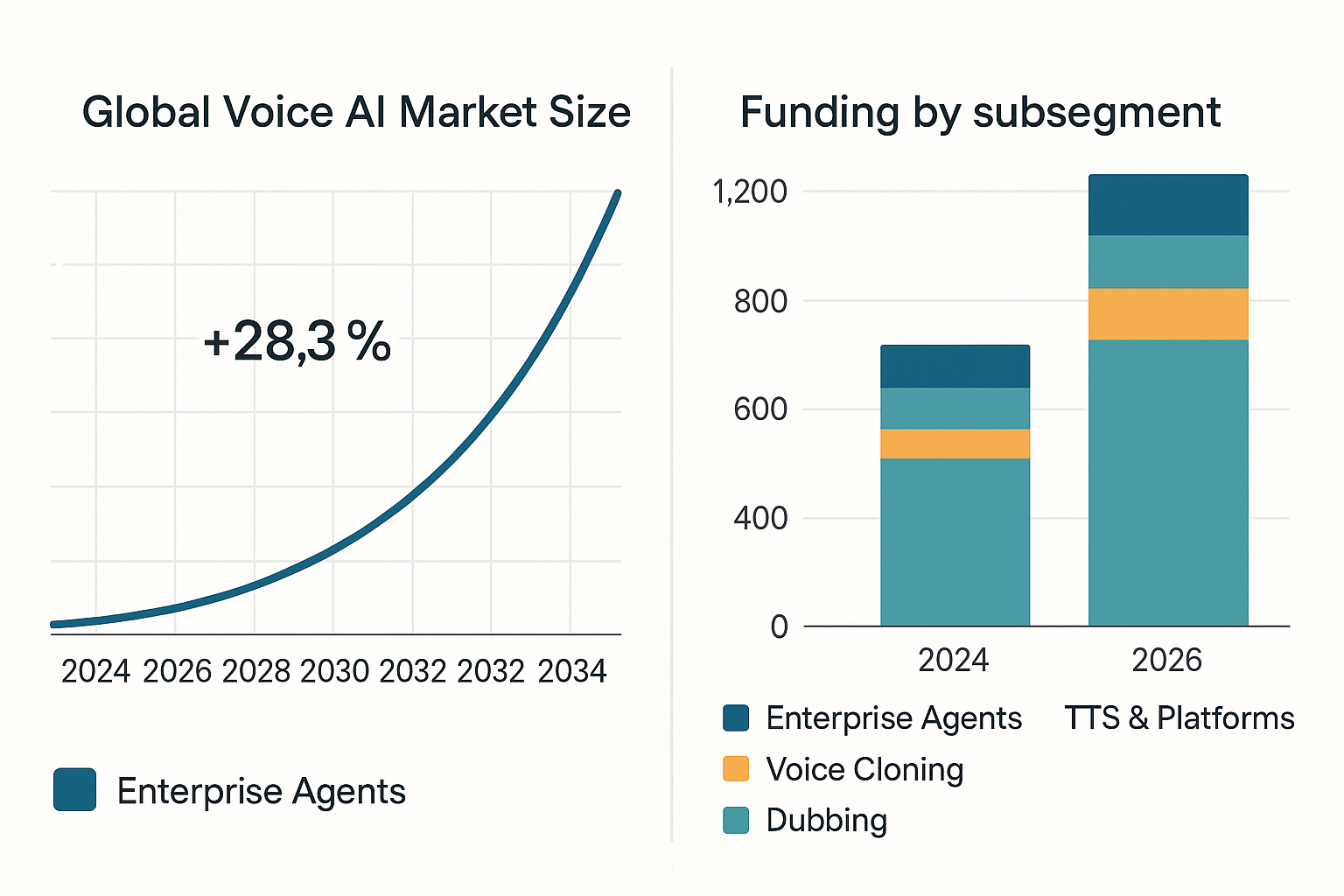
Funding by subsegment (2024–2026)
|
Year
|
Enterprise agents (USDm)
|
TTS & Voice platforms (USDm)
|
Voice cloning (USDm)
|
Dubbing & localization (USDm)
|
|
2024
|
750
|
420
|
180
|
110
|
|
2025
|
920
|
510
|
240
|
160
|
|
2026
|
1,100
|
630
|
310
|
210
|
Notable deal themes and why they matter
-
Prioritize vendors with enterprise APIs and transparent pricing models.
-
Watch for consolidation among TTS and dubbing vendors, which can compress margins and create integration pressure.
-
Value signals favor companies that pair voice cloning with strict security controls.
Core investment trends shaping 2025–2026
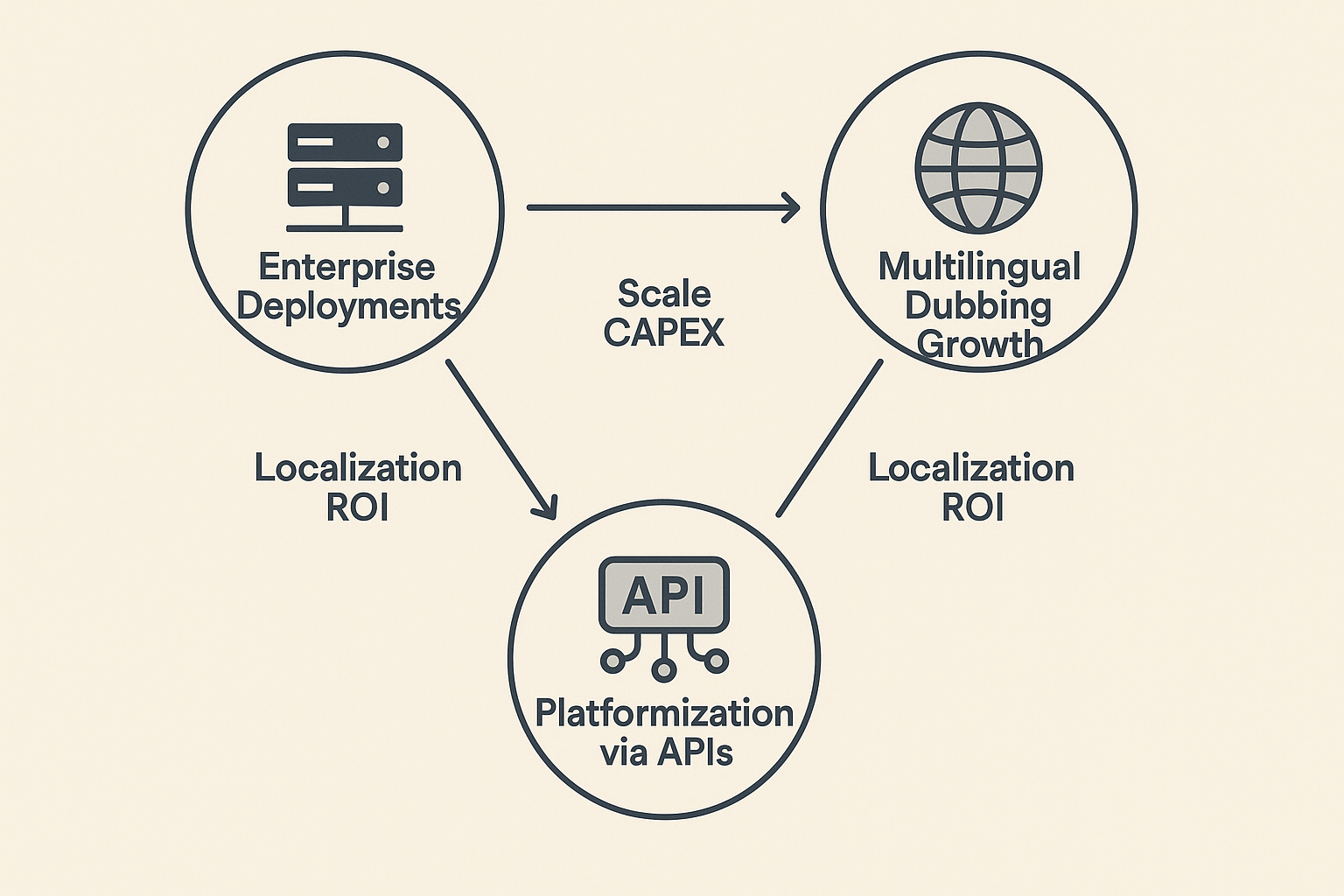
1) Move from R&D to enterprise deployments
2) Multilingual dubbing and localization will surge
3) Platformization via APIs and automation
4) Consolidation versus niche specialists
-
Validate production references and security commitments.
-
Run a small dubbing pilot for 2 markets to test ROI.
-
Check API limits and automation hooks before procurement.
-
Map potential exit or consolidation pathways for portfolio companies.
Why brands are increasing spend on voice AI (business case and ROI signals)
Trackable ROI signals
-
Customer experience and NPS gains: Personalized voices and native-language dubbing raise perceived quality and loyalty. Short tests often show NPS or CSAT improvements from localized audio.
-
Lower cost versus manual dubbing: AI dubbing cuts per-minute labor and revision cycles. This reduces per-video spend and shrinks turnaround time.
-
New engagement metrics: Look for increases in watch time, completion rate, and retention after localization. These metrics map directly to ad CPMs and paid conversions.
How to forecast payback
-
Calculate current localization cost per hour (manual vendor fees plus review).
-
Estimate AI workflow cost per hour (platform credits, editing time).
-
Monthly savings equals manual cost minus AI cost.
-
Payback period equals one-time setup and subscription cost divided by monthly savings.
Technical and operational challenges investors must watch
Quality, data, and authenticity risks
Integration, performance, and observability
Diligence checklist: technical metrics to request
-
Real-word sample MOS (mean opinion score) and test audio links, with test conditions described.
-
Model training dataset size, language coverage, and provenance (consent, licensing).
-
Latency percentiles (p50, p95, p99) for TTS and STT under load.
-
Concurrency and throughput limits, plus horizontal scaling strategy.
-
Error and fallback rates for transcription and alignment processes.
-
Security controls: encryption at rest and in transit, and voice-clone access policies.
-
Monitoring and alerting SLIs (service level indicators) and incident history.
-
Third-party dependencies and integration adapters, with maintenance plans.
How to evaluate voice AI vendors (framework + side-by-side comparison)
Evaluation matrix: criteria that matter
-
Voice quality: naturalness, prosody, and low artifacts. Use blind listening tests and MOS (mean opinion score) for parity.
-
Language coverage: count of supported languages, accents, and subtitle/transcription languages.
-
Cloning and customization: speed to create voice clones, accuracy, and governance (consent, deletion).
-
Security and compliance: encryption, data residency, GDPR alignment, and clone lock to original speaker.
-
Latency and throughput: API response times and batch processing for studio workflows.
-
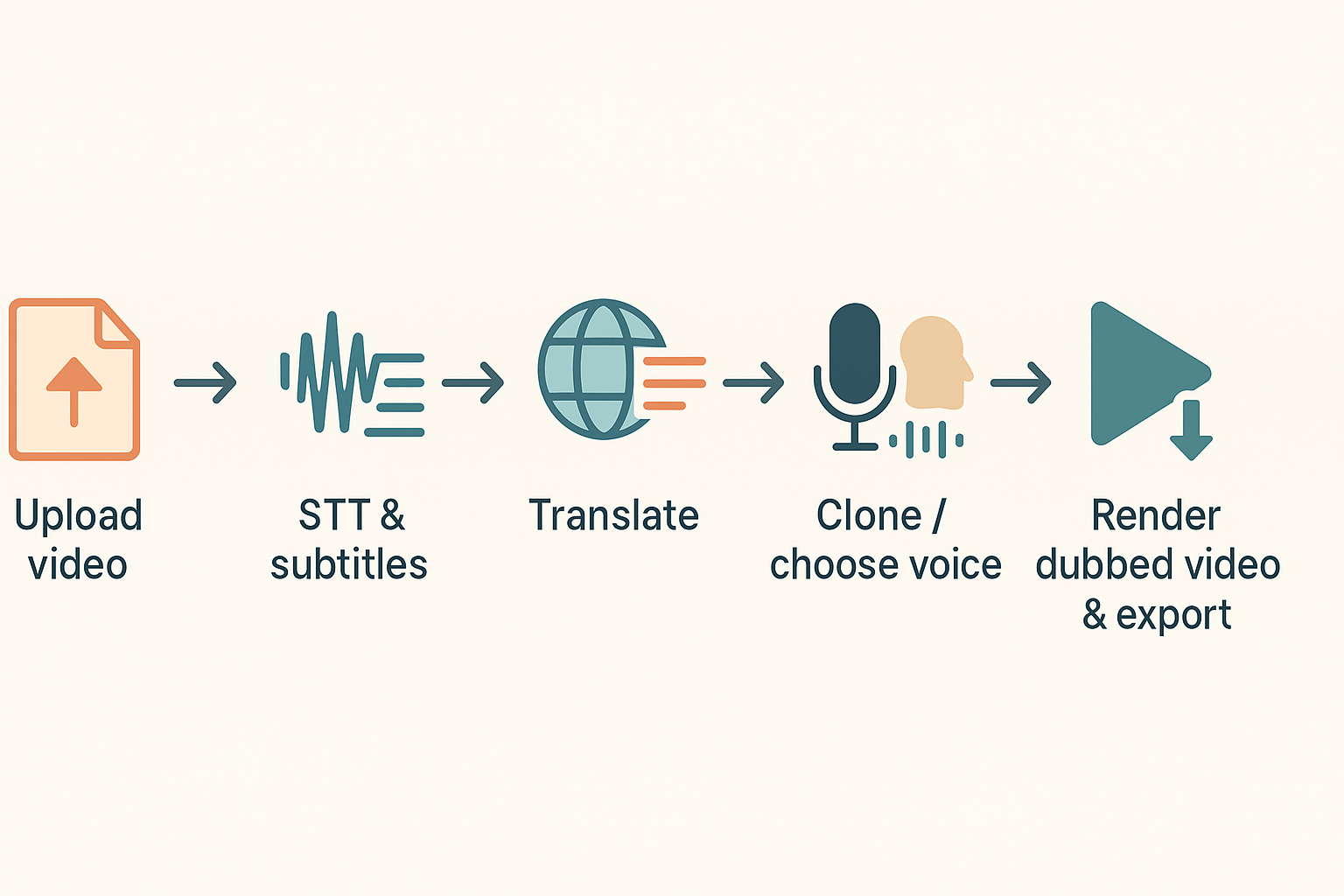
Integrations and automation: API features, plugins (Canva, Chrome), and export formats.
-
Pricing and tiers: trial terms, monthly plans, and pay-as-you-go options.
Side-by-side comparison (procurement snapshot)
|
Criteria
|
DupDub
|
ElevenLabs
|
Synthesia
|
|
Voice quality
|
High, 700+ voices, 90+ languages
|
Very high for TTS
|
Focus on avatars, moderate TTS
|
|
Multilingual dubbing
|
End-to-end video dubbing, subtitles
|
Limited video dubbing
|
Video-first, less language depth
|
|
Voice cloning
|
30s sample, 47 languages, locked to speaker
|
Strong cloning accuracy
|
Not core focus
|
|
Security & compliance
|
Encrypted processing, clone lock
|
Enterprise options
|
Enterprise options
|
|
Pricing & trial
|
3-day free trial; tiered plans; PAYG
|
Subscription-based
|
Higher enterprise pricing
|
|
Integrations
|
Canva, Chrome, API
|
API only
|
Platform-driven workflow
|
Red and green flags for RFPs
Case studies & use cases: Where investments are paying off (including a DupDub vignette)
Enterprise contact center automation: cut cost per call
-
Average handle time (seconds), right aligned
-
Containment rate (percent), right aligned
-
Cost per call (USD), right aligned
-
CSAT and NPS changes (points), right aligned
Scaled creator video localization: a DupDub vignette
-
Time-to-publish per localized video (hours), right aligned
-
Localization cost per minute (USD), right aligned
-
Languages published per video, right aligned
-
Engagement lift by market (views or watch time), right aligned
-
Voice clone reuse rate (instances), right aligned
E-learning translation: speed and compliance
-
Course completion rate change (percent), right aligned
-
Translation throughput (minutes localized per week), right aligned
-
Time-to-market for updated content (days), right aligned
-
Localization cost per learner (USD), right aligned
Adoption roadmap & checklist for enterprises (IT, legal, marketing)
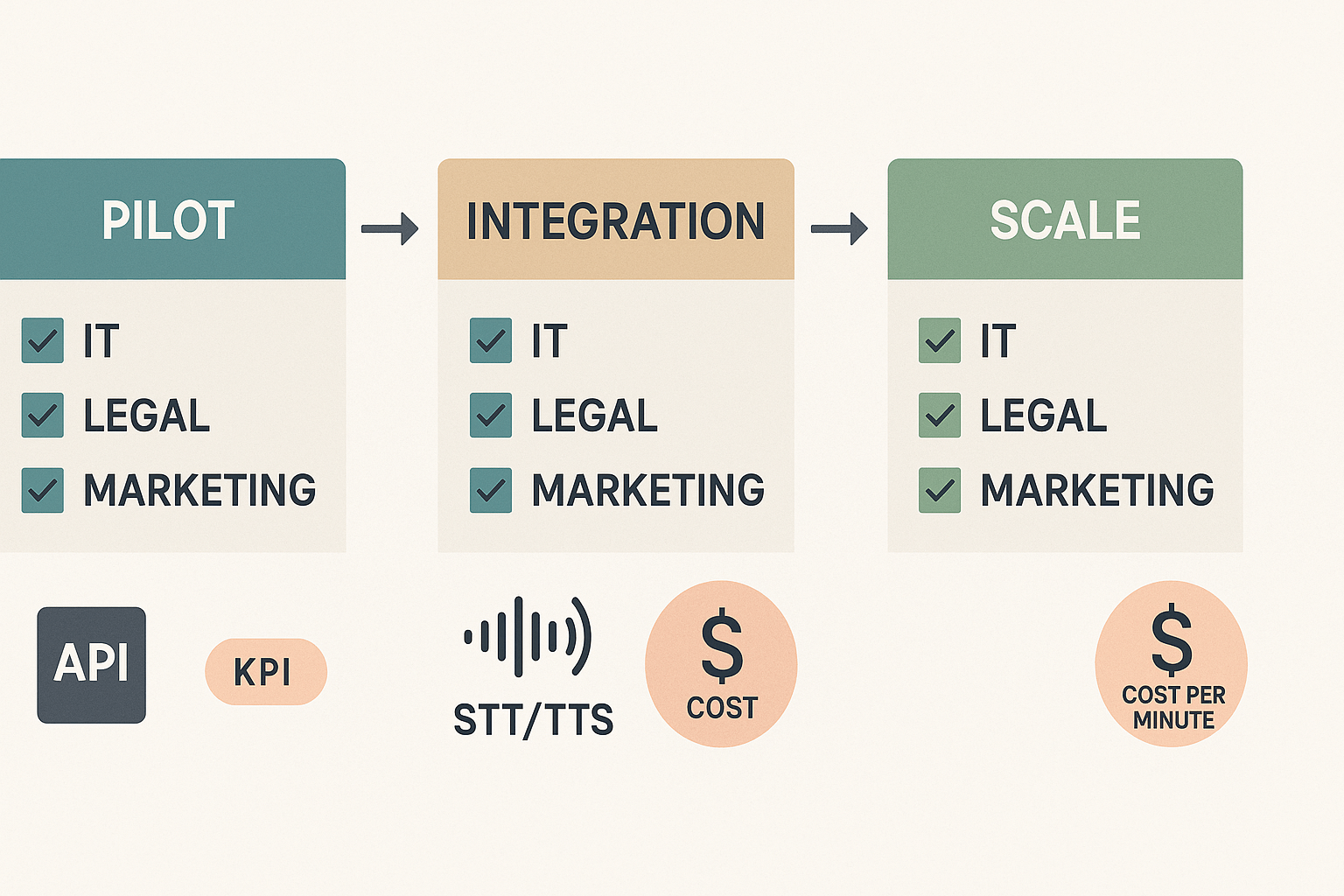
Phase 1: Pilot (4–8 weeks)
Phase 2: Integration (8–16 weeks)
Phase 3: Scale (ongoing)
Integration checklist (quick)
-
API access: keys, rate limits, webhooks
-
STT pipeline: confidence scores, punctuation, language detection
-
TTS pipeline: voice cloning, SSML support, style tags
-
File formats: MP4, WAV, SRT compatibility
-
Automation: queueing, retries, error logging
Legal and privacy checkpoints
-
Confirm speaker consent and cloning lock policies
-
Data retention and deletion workflows
-
Encryption in transit and at rest
-
GDPR and regional compliance reviews
Measurement plan and KPIs
-
Time to localize (hours per minute of video)
-
Cost per localized minute or asset
-
Acceptance rate of generated voices by reviewers
-
Publish velocity and audience lift by locale
-
System uptime and pipeline error rate
Investment risks, regulatory & ethical considerations
Due diligence questions
-
Does the vendor require explicit, auditable consent for voice cloning?
-
How long are raw voice samples and derived models retained, and why?
-
Can customers permanently delete cloned voices and audit deletions?
-
Is cloned voice data cryptographically bound to the original speaker?
-
Which jurisdictions ban or restrict biometric voice use, and what triggers escalation?
-
What portability and exit clauses reduce vendor lock-in?
FAQ: People Also Ask and investor FAQs
-
What is driving voice AI funding in 2026?
Investment is flowing into platforms that reduce dubbing costs and accelerate global content publishing. Growth is driven by demand for localization, scalable content production, and automation across media, e-learning, and marketing workflows.
-
How should enterprises set a voice AI budget for 2025–2026?
Start with a 3-month pilot to validate KPIs. Then budget for API usage, user seats, voice cloning needs, and scaling costs. Expand only after confirming ROI and operational fit.
-
Which features matter in a voice AI vendor comparison?
Key features include multilingual TTS and dubbing, voice cloning accuracy with consent controls, API access with SLAs, enterprise-grade security, and transparent pricing with clear usage limits.
-
What ROI timeline can investors expect from voice AI deployments?
Most projects reach payback within 6 to 18 months, especially for localization and content reuse. Faster ROI is common when workflows replace manual dubbing or expand into new markets.
-
What technical and privacy risks should investors watch in voice AI?
Key risks include model drift, data leakage, weak consent management, and changing regulations. Mitigate these with strong governance, audit logs, encryption, and ongoing compliance reviews.
-
How can buyers validate voice AI vendors before purchase?
Run a proof of concept using real content, test voice cloning quality and language coverage, and request security, compliance, and SLA documentation. Use a short trial to compare performance, cost, and integration fit.

 Discord
 YouTube
 Tiktok
 Twitter
 Facebook
 Instagram